Shoppers often ask us why two gas fireplaces with the same look can have such different prices and installation requirements. The answer is usually venting. Here is what separates direct vent, vent-free and B-vent models.
Direct vent
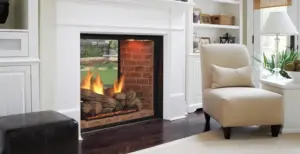
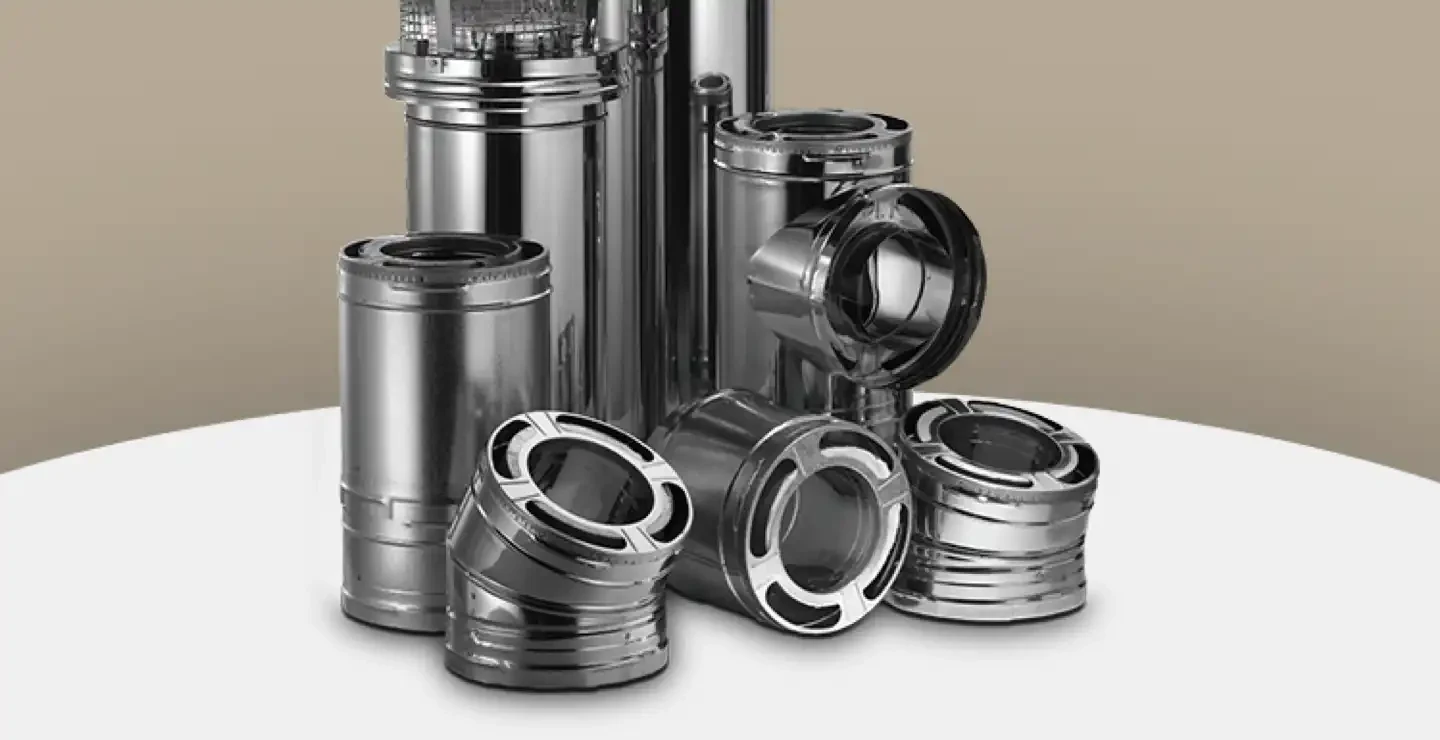
A direct vent fireplace is a sealed system. A glass front separates the firebox from the room, and a coaxial pipe brings fresh air in from outside while sending exhaust out. Because nothing from the fire enters the room, direct vent units are the safest and most efficient option, and they are approved for bedrooms and bathrooms.
- Vents horizontally through a wall or vertically through the roof.
- Typical efficiency of 70 to 85 percent.
- Sealed glass front; no odor and no moisture added to the room.
Vent-free (ventless)
Vent-free fireplaces and log sets burn so cleanly that they need no chimney or pipe. That makes them the easiest gas product to install and nearly 100 percent efficient, but the combustion by-products stay in the room, so codes limit the BTU rating by room size and some states and cities prohibit them entirely.
- No venting needed; can be installed on almost any wall.
- Oxygen depletion sensor shuts the unit off if air quality drops.
- Not permitted in some jurisdictions; check local code before you buy.
B-vent (natural vent)
B-vent fireplaces use room air for combustion and vent exhaust vertically through a chimney, much like a traditional wood fireplace. They offer an open flame look but lower efficiency, so they are chosen mainly for appearance rather than heat.
Which one should you choose?
For a new living room fireplace with real heat, direct vent is the default recommendation. For a basement, apartment or an older home where running a vent is impractical, a vent-free unit may be the only practical gas option, provided local code allows it. If you are replacing an existing open fireplace and want to keep the look, consider a B-vent unit or a gas log set. Every product on our site lists its vent type in the specifications tab, and our team can confirm which one suits your room.